
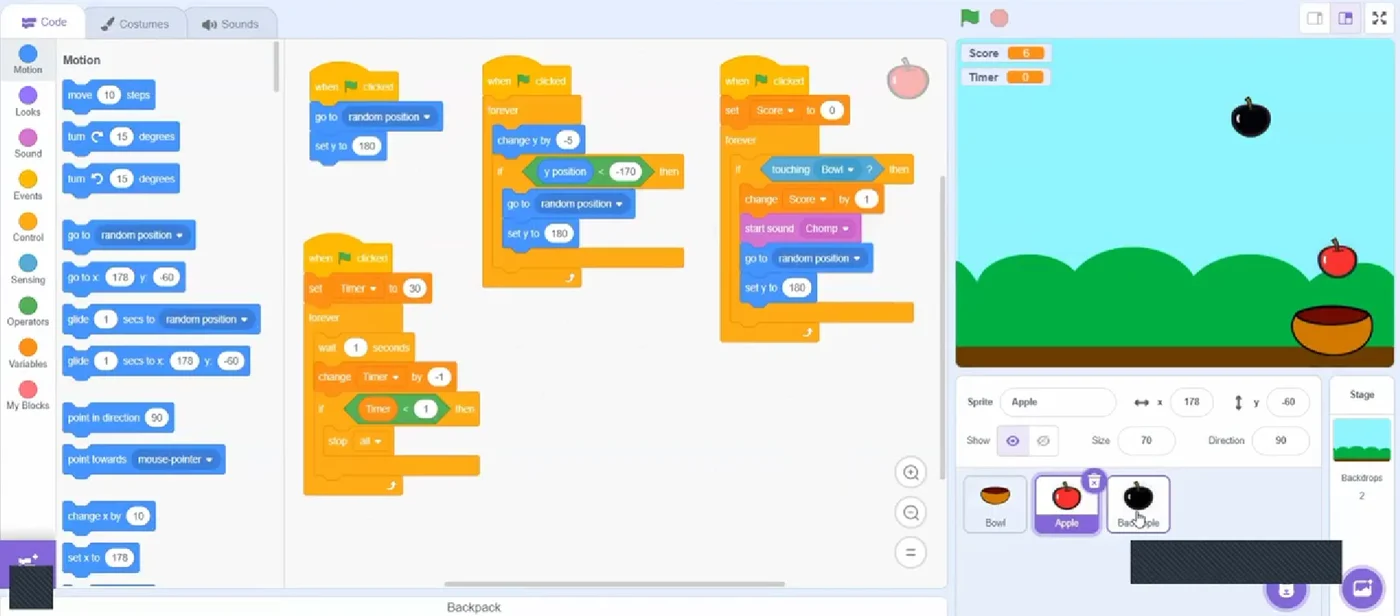
Block coding: stories, animations and small games. Children learn order and logic before they type a line of code.
Tools
From using apps to building them. Programming is a way of thinking, not code copied from a video.
Ages 6 to 9Ages 10 to 13Ages 14 to 18
 Track instructor · ages 6 to 13George Adly
 Track instructor · ages 14 to 18Shirien Ashraf
By age
Block coding: stories, animations and small games. Children learn order and logic before they type a line of code.
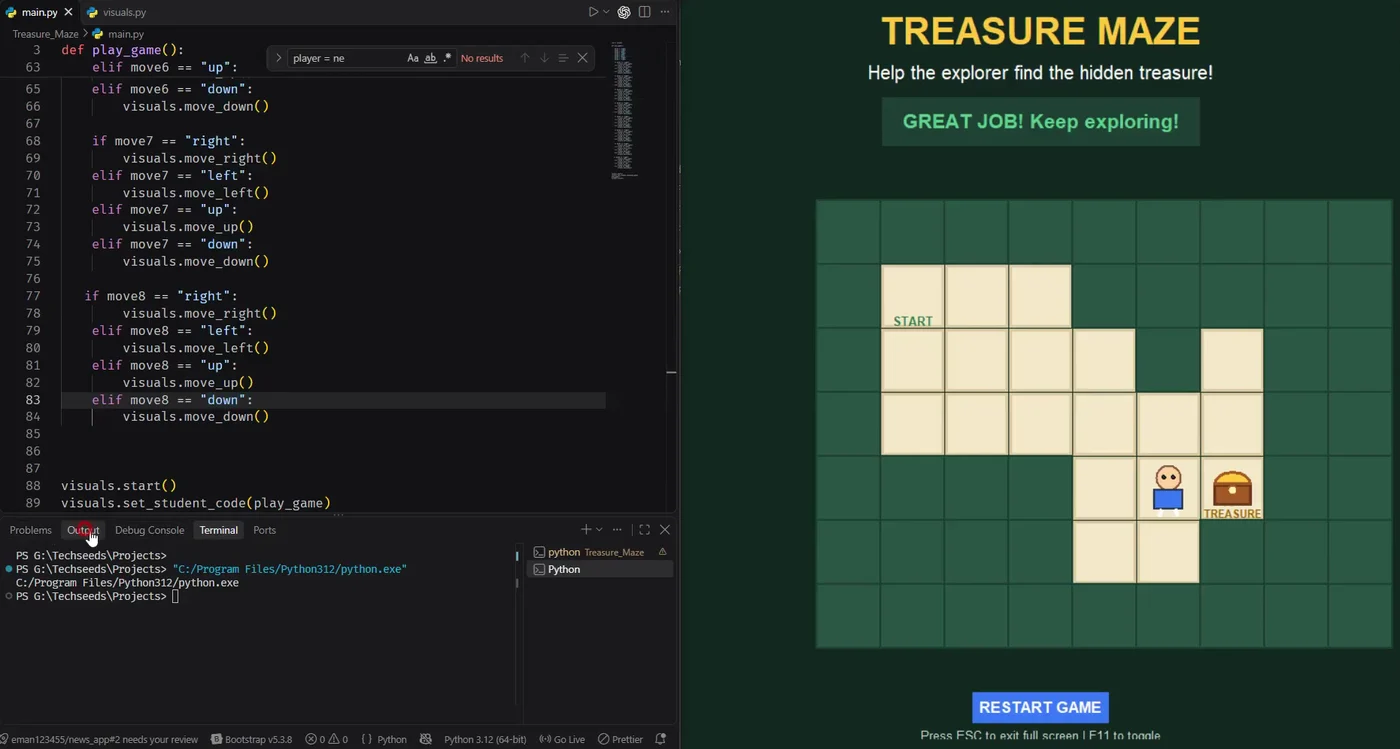
Real, typed code: programs that ask, decide and respond. Every level ends with a working program.
The language of the web: programs that store, analyse and organise real data.
What programming is, flowcharts, output, variables, user input, decisions (if / else) and debugging.
Final project: A treasure-hunt adventure game where every choice leads to a different ending, with a score.
Loops, lists and functions: programs that react to the user.
Final project: A quiz or game a friend can play.
Data, files and simple algorithms, used to solve a real problem.
Final project: A small app for someone they know.
Variables, data types, operators and decisions.
Final project: A score calculator: school grades, game scores or a shop invoice.
Repeating tasks, reusable functions and lists of data.
Final project: An analyser that handles many records: averages, highest, lowest and search.
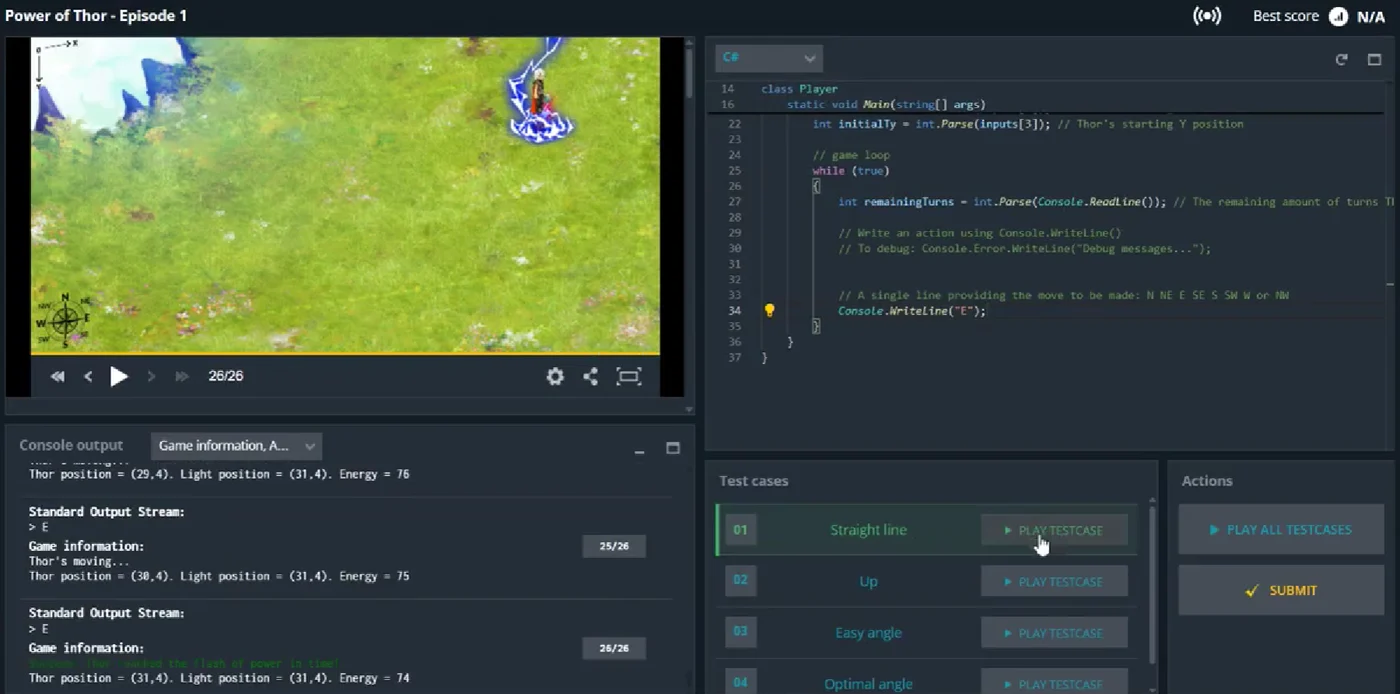
Objects, arrays of objects, searching, filtering and sorting.
Final project: A record-management system for students, players or products.
Real projects
The free placement test suggests the closest track for your child.